Blog ala Vidar
SQL, AppFrame and other cool technologies
Tag Archives: 5 minutes interview
5 minutes interview #9 – Tim Bosinius
Posted by on September 3, 2009
Tim is the IT Manager at TGE in Germany. I’ve been down there visiting them about a year ago, where I helped on upgrading their database to R3. The things I remember Tim always talked about was SharePoint and Web-services. I thought he was in love with Web services, because he talked so much about it. But, then I remembered that I talk A LOT about SQL Server, so, guess we’re even there :-P. The last week Tim and Florian (also from TGE) have been on AppFrame training, learning the inside of AppFrame. He’s already got 5 posts out!
What did you do before you started at TGE?
In the mid 1990’s some fellow students and I were running our own business focused on Linux. When starting with automated deployment of Windows NT 4.0 in 1997, I completely turned to the “dark side”. In spring 2000 I joined an international operating Telco as “Client Systems Lead” for their ~5000 seats network. This was at the climax of the dot-com bubble. Due to some lucky turn of events I managed to stay with them and the successors as Microsoft Technology Architect and later as team lead for the backend systems and data centers. When I saw the job offer from TGE in 2005 – I knew that this has my name on it and I applied.
What do you think about AppFrame?
There are so many frameworks available. For example Habanero.Net, Spring.Net or TrueView. DevExpress and Telerik provide interesting ORM tools. While all of these have some interesting aspects, I am really confident that the choice of AppFrame R3 is the right one. The security design starts at db level, it provides SQL injection protection with AppFrame and it is possible to create solutions in WinForms and Web applications with lighting speed. (well – especially if the minimal allowed coding speed that Jan Leon showed us… a web service, a WinForms GUI both fully functional from scratch to compile in something like 6 minutes…)
You have any ideas on what to make in AppFrame? Web services talking to SharePoint?
Integration of AppframeR3 into SharePoint is certainly an important step. The upcoming build provides a good basis. I will blog about the currently available methods and our implementation in the near future. But my wish list for AppFrame is longer… First I would like to see that the distributed file store concept gets an addition. I would like to be able to define a central file store. Files should be copied via BITS (Background Intelligent File Transfer Service). Another thing that would be awesome would be “afWebServiceDatasource”. While it is just a few lines of code to query a web service, it would be much better to centrally define which remote web services an AppFrame solution is using. If it should be executed on client or server side, if the result should be cached and so on.
What do you do when you’re not sitting in front of the computer?
Well, I guess then it must be broken and I will most likely sit behind it trying to fix it J. My wife always knew that I am a geek. I guess my two daughters and my son should know by now.
5 minutes interview #8 – Geir Ove Fjellstad
Posted by on August 27, 2009
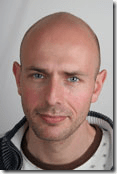 Did you know that Geir Ove was one of the first lucky guys to get AppFrame training from me? Now he’s the team leader for the BP-team in Stavanger. You see the connection?!
How was your first week? Did you actually learn anything at all?
Frankly, my first week was scary. AppFrame, R2, CR1, CR2, MarketMaker, PIMS – all these words that I just couldn’t figure out but felt I was expected to (not sure I really understand them today either:)
But friendly colleagues in a laid-back environment helped me relax, and one step at the time I eventually got familiar with "The Omega way" (I hope).
What did you do before you started in the BP team?
After finishing my Master in Australia in 2004, I returned to Norway to an IT job market pretty much "on hold". I therefore started working for Søral, an aluminum producer. In 2005 I decided to "do a Bill Gates" and started my own company offering IT/programming services. After a year or so I came to the conclusion that Bill probably was luckier with the timing than me, so I decided to apply for a real job instead. My timing was a lot better this time, because Omega had vacant positions and I was lucky to get one. I started in May 2006 and have never looked back.
Is there anything particular that you’ve found interesting while working in Omega?
Hard to put a finger on anything in particular because what I feel is interesting changes. A year ago I felt the most interesting thing in the world was to figure out fancy technical solutions to a problem at hand. Today however I find it even more interesting to try to "get under the skin" of the client, and try to figure out what the client really needs (which often is something completely different than what the client says he/she needs).
Do you have any hobbies, except computer stuff?"Computer stuff" is actually not a hobby for me. I like it a lot (tend to love it sometimes), but I always think of it as my profession only. I feel it’s healthier to have this attitude (and then I can book man-hours:) For hobbies I play golf once in a while, deer-hunting every autumn, scuba-diving occasionally, trip to the gym now and then, and looking at the girls all year around.
5 minutes interview #7 – Jekaterina Golouchova
Posted by on August 20, 2009
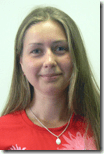 Jekaterina, or Kate as everyone calls her, has been on my team since she started in Omega. Although she’s sitting in Lithuania we’ve had relative good communication via MSN. I’ve also been in Lithuania a couple of times to visit the guys (and girls). The thing I like the most about being in Lithuania is that I get to talk ALL the time. When I’ve been there we’ve had almost non-stop sessions about SQL, .NET and other interesting topics.
How did you start in Omega, and how was your first day?
In 2006 I finished the University and sent my CV to UAB Omega. After the interview I was sure I wouldn’t get the job, because I haven’t had enough experience. So I was very happy to receive an offer to work in UAB Omega as a trainee. On the first working day we had session about TeamDocuments and after that I started with AppFrame certification program.
What have you been working with?
When I have started in Omega I was working with CR1/CR2 bugs, AppFrame Reports and some SQL stuff. During that period one of the most interesting tasks was to create the "Dynamic Reports" concept in CR2. I learned a lot of new things while I was working on it. Now I’m working with CR3 (create new forms, fix bugs and etc.), reports and SQL-code.
What do you think is the most interesting thing to work with? Any examples?
Till now everything I’ve worked with have been very interesting for me. I like to work with forms (create new, make changes etc.), reports (reports with sub reports, writing script, reports with charts), fix bugs (figure out why this bug appears, how to fix it), work with SQL Server (create views, SP, work with triggers, overview what’s new) because every time when you work with all these stuff you learn something new.
Except computer stuff, do you have any hobbies?
I like to read (most often humorous fantasy). Not long ago I bought an e-book reader so now it’s more convenient to read books. Also I like to ride my bicycle (especially to the seaside). Sometimes when I’m not lazy I go in for sports (aerobics, swimming or other sport exercises). When I have a good mood and inspiration I like to cook. And also I spend a lot of time with my family.
5 minutes interview #6 – Vadim Naroznij
Posted by on August 13, 2009
 Vadim is Omega’s chief in Lithuania. We’ve played tennis several times and he and his brother are always nice to me when I’m visiting Lithuania. He and Loretta also made a very cool game when we had a teambuilding in Klaipeda.
Do you remember your first day in Omega?
The next day after receiving my master diploma at university (in July 2005) I came to Norway to work for Omega AS. I was assigned to the Drift department that Eiolf Berge was at the time running. This was actually not my first meeting with Omega and AppFrame – I have been communicating with Eiolf for a half of year over email and had already completed the CR1 certification program, and read quite many documentation files by that time. So I was at ones assigned to solve a nasty bug inside CR2 client (which was quite fresh back then). Coming from web development background, this was a tough challenge.
I remember you did the first eFaktura (electronic invoices) in Omega. What else have you been doing?
That’s right – eFaktura application was a web service client for submitting invoices to Statoil directly from AppFrame. Statoil was so impressed how fast and neat we did the implementation that I’ve got a year-long assignment in their IT department in Stavanger (working remotely from Ølensvåg) to help other suppliers implementing and debugging similar solutions. This job made me learn many interesting standards and technologies like E2B, xCBL, PIDX, XSD, WSDL, BizTalk. A bit later I have been assigned to a project integrating PIMS 2000 with the production database in Ølen Betong. Being transferred to the Technology department I was somewhat involved into system world development and documentation, created a new AppFrame certification program for newcomers. Apart of that I was involved in many internal applications development including Travel Expenses, Group SMS, Telephony, My CV, Timesheet, CR3 email application, mail server services and eLearning courses. Over the time I had a chance to participate in some PIMS modules development – such as CMS, ResourceMgmt, DocMgmt, QuantityMgmt, ProjectPortals. Since 2006 when Omega established an office in Klaipeda (Lithuania), I have been leading the daughter company and mostly working from here.
If anyone visit Klaipeda, which places should they see?
Let’s start with that if you plan to visit, it’s best to look into the events calendar on e.g. Klaipeda.lt web page – than you might come just in time for some cool events like the yearly international Jazz festival or a Midsummer festival or maybe the famous Sea festival, which by the way was held on the last weekend and was topped with arrival of the whole "Tall ships races Baltic 2009" fleet (there were also two sail ships from Norway :). If you happen to be in Klaipeda when no events are happening, I’m pretty sure that there will be someone from our friendly local team who will show you around: old town streets, panorama from 21st floor lounge bar, sea/clock/amber museums, white sandy beaches and introduce you to some Lithuanian cuisine specials 😉
What hobbies do you have, except computer stuff?
Apart of being a geek, I also like fishing, hiking and shooting (that’s why I like staying in Norway – there’s plenty of either). I enjoy casual sports activities like cycling, volleyball or jogging (latest addition: skiing). After spending almost the whole day at the PC, I hate reading, but I like fiction books… – my solution is audio books (note: don’t get too involved while cycling).
5 minutes interview #5 – Håvard Ravatn
Posted by on August 6, 2009
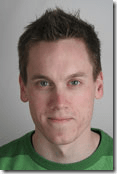 Since I first met Håvard, he’s been teasing me about me being a "Karmøy-bu" (a guy from Karmøy). This is of course a great excuse if I’ve got a PEBKAC, I can just say "Hey, I’m from Karmøy…". Håvard has been Trygve’s right hand for several years, and the only bad thing he has to say about Håvard is that he’s working to fast. He can build PIMS in 3 hours. That’s even faster than Johnny! That’s of course not a bad thing but to be honest Håvard is a very clever guy. He’s also started blogging at http://blogs.appframe.com/havard/ Stay tuned for blog inputs!
So, Håvard: How and when did you start in Omega?
Being from Ølen I’ve known many of the ‘founding-fathers’ of Omega for quite a while. I got my first pay-check from Omega some 15 years ago having a summer-job painting parts of the then brand new main office in Ølensvåg. After finishing collage in 2003 I had a word with Torleif and applied for an open position as system-engineer which I didn’t get. Instead I started on master-level studies, but luckily I got a phone-call from Lars the following Christmas about an open position. I got an interview with Svein Tore who took his chances and hired me. I had my first day as a “real” Omega-employee in January 2004.
What have you been doing all these years?
I started out in Svein-Tore’s department, got my ‘basic-training’ in the Omega-office in Stavanger, and then worked mainly with CMS-related stuff for Statoil and ABB Offshore for a few of months. In June 2004 I was asked to go Bonn, Germany to work for TGE for a ‘couple of weeks’. In true Omega-fashion I ended up working in Germany for almost 18 months! After returning to Norway I worked in Ølensvåg for a couple of months and then started working for Aibel in Stavanger in February 2006. I stayed there until about a year ago when I moved to Bergen and starting working at the new Omega branch-office. At present I do work for several clients such as Aibel, Seawell, Siemens and StatoilHydro.
What’s the "main theme" of your blog going to be?
I haven’t really decided what to blog about, but I’ll probably focus on AppFrame and PIMS related stuff. I hope to share some of the tips, tricks -and knowledge I’ve picked up during my years in Omega.
Do you have any hobbies, except computer stuff?
I listen a lot to music and waste countless hours in front of my stereo-system. Now and then I try to get some exercise and usually take hikes in the mountains surrounding Bergen. I’m also a Discovery Channel-addict!
5 minutes interview #4 – Peter Øren
Posted by on July 28, 2009
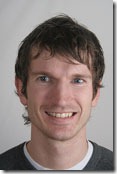 Peter has been working in Omega for 3 years now. The first time I got to have a good chat with him was at technology’s teambuilding to Hovden. That was very fun! In December 2008 Peter took over as "working chief" since Johnny’s been set to be the master of PIMS for a while.
Do you remember your first day? How was it? …. and when was it?
Yes, I remember my first day. I started up in April 2006 starting AppFrame certification program with assistance from Johnny. It was an exciting day, as it always is when starting in a new job.
What did you do before you started in Omega?
I have been working in 2 companies before I came to Omega. I first started in a small company called Globe Systems which was located in Bergen. We were developing competence mapping and personnel testing tool for large companies. I Spent 2.5 years in Globe before I moved back to Ølen/Etne. In 2003 I began in Hatteland Display working with both hardware and software development. I worked 3 years there before I got hired in Omega.
What have you been doing in Omega since you started?
When I started in Omega, the Web2 framework was on its way up. I joined the team that developed the Web framework, and my first big project was the AppFrame Grid control. I continued working with the web for quite some time. Then after 1.5 year I joined Sigmund and started working with internal applications (MarketMaker). In that period of time we were focusing on getting some of MarketMaker on Web2, but after 3-4 months we started on the AppFrame R3 framework which, as you know, ended up as the Access killer. From that time I was next in charge in Tech department. In December 2008 Johnny started up as lead of PIMS product development. I took his place and now working as Manager for Tech. dept. in Omega.
What do you think is the main difference between working with internal applications and system applications?
When working with internal applications you have a large influence on how the end-user does their daily work. And off course the development it is limited down to single applications. Developing the framework gives influence on the system developer and how they are working, which is quite different from an end user. Also when working with framework you have to consider all possible approaches that can appear since it will reflect in all applications using the control. So the code you write has very large impact in a both positive and negative way :). But it gives challenges in a very different ways.
I’ve seen a bit of web3, and I have to admit it looks AWESOME and easy to both use and develop. Could you tell us a bit about when systems engineers can start using it and what they can expect from it?
First of all we have to keep CR3 development and Web3 development separated. Web3 will not, due to limitations in VS designer, be as effective as CR3 development. When that is said I hope and expect that the developers will find it easy to do development in, and a user-interface which behaves and looks much better than what we are used to in Web2. The integrated source control and the DevConnectionString, as we are familiar with from CR3, will speed up the development very much. In addition we don’t have any own developed controls. All are based on Telerik, which gives a more robust environment.
Why did we choose Telerik instead of DevExpress on web?
Telerik has a much more powerful web control package than DevExpress. I believe that they have been working with web controls for a longer time than DevExpress. But for Win Forms DevExpress is in front of Telerik. We tried out DevExpress in a period of 3-4 months, but found it quite difficult to create a dataobject that worked well together with the grid control. In addition we had other small issues that caused quite some headache for us. So I’m really confident that we have done the correct choice.
What’s new in build 4 that’s scheduled for early August?
The August/September build will be the largest build we have had so far. It’s been 6 months since last build, and therefore we have a lot of new stuff in addition to bug fixes. For CR3 the load on demand of DLLs and publishing without the need of restart of CR3 that are the most wanted features. In addition we have quite a few other features that have been implanted in the framework.
For Web3 it is the Client Side data-binding which is high-runner. This new technology will increase the performance of applications quite a lot. We have developed a control package for the Client Side framework, and I think this will be a future proof concept that will live for quite some time.
Except programming, do you any hobbies?
I spend much time with my family. But in addition I like to play volleyball, soccer and in the winter skiing is highly preferred. I also try to play the bass whenever I have the chance.
5 minutes interview #2 – Audun Hove
Posted by on July 27, 2009
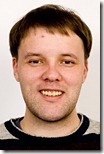 I first met Audun at IRC, #linux.no@Undernet about 8 years ago. My impression was that he was a true geek. He helped me with dummy C (the language) questions and of course various Linux problems.
After working for Omega a couple of months I heard about a bet Johnny (my boss at the time) had with Audun. Was pretty cool to find out that the guy that I’ve been annoying with various questions on IRC actually worked in the same company as me!
So, Audun: How did you end up in Omega and what were you doing before that?
Before Omega I was working in a company some friends of mine and myself had started, we made software for the shipping-industry related to the new (at the time) STCW-regulations. In 2006 we eventually had to shut down due to lack of short-term income. I started looking for work and got a tip about Omega through my father who was working with Tor Erling Lunde at the time. I sent a CV and application and got called in for an interview. The interview went well and I went to Bonn in Germany to work for TGE there about a week later, in June 2006.
What’s your current position?
I’m currently technology responsible for Karl Inge’s department, 3a. I go to various clients and help out with development, currently I’m in Denmark doing some work for Maersk.
Do you have any hobbies, except computer stuff?
I manage to sneak in a bit of reading, listening to music and watching movies. I enjoy taking photos as well.
Linux or Windows?
Linux of course!
5 minutes interview #3 – Arvid Markhus
Posted by on July 27, 2009
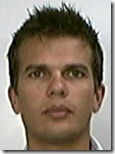 Arvid has been working for Omega for several years. He’s located in Houston, but has been in Stavanger for many years in the Statoil team. I know he’s going to get married in about a year, but except that I don’t know much about what Arvid has doing. So..
How did you start in Omega? Do you remember your first day?
I’ve been friends with Arild Røksund since high school and it was he that opened the “Omega door” for me back in February 2004. I was thrown directly to the wolves in Statoil when I started with Omega, and remember I was more nervous about the HES exam you have to take before entering the Statoil office than any exams I ever had in College for some reason. After seven months in Statoil working on the Snøvit project I started in the Statoil PIMS Support team and spent two years there before I moved to Oslo working for Aker Solutions. I didn’t spend more than six months in Oslo before I traveled to Houston for a two week trip which ended up turning into seven months! I really liked the lifestyle over here and when Øyvind Vik offered me a permanent position in Houston with Omega Project Solutions I gladly accepted that, so here I am.
What’s your current position?
I work as a Lead Systems Engineer in Omega Project Solutions, (Omega’s Houston office). Since our project with Devon ended earlier this year I have been working on several minor projects for different clients, and is right now preparing for a three months trip to Malaysia where I will start up PIMS for the “Kebangagang” project, which should be cool as they will get the latest and greatest of both CR3 and Web3.
You were in Norway a couple of months ago to get to know the new framework. What’s your opinion? Anything particular you liked, or disliked?
In Houston there is a very high focus on web, and after working with web2 it’s a true joy to be working in the new framework. Though there always are a few bugs when you are working with something as new as R3 web, Peter and Ronny shall have all honors for solving any issues rapidly. The fact that we are using 3rd party components from Telerik and DevExpress also makes the job a lot easier, as you can search their pages for tips and tricks.
What are you doing except work in Houston?
As you mention I am getting married next year! The wedding will take place in Canada where my fiancé is from, and planning a wedding in one country from a different country, in addition to coordinate with my family in a third country, you get the picture, that take some time and energy.
Houston is a big city with a rich culture life, so there is always a concert or show to attend. In addition the weather over here is quite pleasant with temperatures between 35 and 43 degrees Celsius the whole summer, so just relaxing by the pool with a few cold beers is something I try to do as often as I can too.
5 minutes interview #1 – Trygve Haaland
Posted by on July 14, 2009
 Trygve is my new boss. My first years in Omega I was running a lot back and forth to his office. He helped me understand, and solve, a lot of access-tasks. Btw, did you know that Trygve was the top contributor in the MS Access area on experts-exchange.com for a long time?! He’s always online at evenings, and we’ve had a lot of good discussions about everything from cars to .NET. Trygve is now the head of department 3E.
So, Trygve. How was your first day in Omega?
Way back in September 1993, I started working in our offices, at that time located at Nerheim in Ølen. I got a pile of MS Access (1.0) books and started self-studying to learn about databases and how to develop them. The goal was to read up as quickly as possible so that I could contribute to the development of our internal admin/accounting system. Long hours, but very interesting and the work environment was pleasant and full of humor. I had known several of the people working there, Sigmund, Lars, Arne Gunnar, Kjetil etc, from the mid 80’s and had also worked earlier both during summer vacations and after school at Futura Datasenter, Sigmund’s "pre-Omega company".
What projects have you been working on?
As you can imaging there have been a few. I was kicked to the wolves and worked for Kværner installation my first year away from the office in Ølen. This was at Kværner Rosenberg yard in Stavanger where we built a work prep, CMS, hours system from scratch. The project experience taught me A LOT. I worked in the Statoil team for some years which gave me invaluable knowledge from the multitude of modules and application we have created for them. When returning to Ølensvåg I worked on several projects, also internal applications like our email client. The later years I have worked on some larger projects including a Contractor based cost system etc. My team was extended to also include some minor customers served by a support team I lead and last year this was concretize into a separate department as part of a reorganizational process in Omega. Now I try to balance my work hours between doing development for clients and handling our employees, projects and clients from a "paper point of view".
What do you do on your spare time?
Having a family with two boys, at five and nine, there are plenty of activities and things to do in the evenings. I train the soccer team where the oldest one plays and the younger one have also started "playing". Since I am also trying to attend one or two weekly old boy’s soccer practices there are some soccer going on. My two favorite red teams, Liverpool and Brann, also gives me a lot of good times. Add to this a pack of dogs, two horses, some cats, a big lawn etc and I have no trouble filling my spare time.
What’s the most fun part of working in Omega?
It is the combination. No two days are alike, always PLENTY to learn, I get to work with my hobby (got my Commodore 64 back in 1982) and all the talented, skillful and cheerful colleagues makes it impossible not to have a good time at work.
If you didn’t work with computers, what would you work with?
A very good question with no easy answer. My education was in electronics but when I started in Omega, I had plans for a higher education in economics so I might have ended up in that direction. A trip to the movies where a bunch of us saw "Rambo III" (Sigmund is EXTREMELY fond of helicopters) ended up with the question or rather a declaration that I should rather start working for Omega instead of wasting any more time on studies 🙂
Thanks for your 5 minutes 🙂


 Blog ala Vidar